Beyond a Mopey Morrissey
What the Smiths’ singer’s celluloid tale reveals about chronicling contemporary legends

Was this me using work to go to the movies and jam out on some Smiths? Maybe. And I got to geek on it after.
We are no strangers to the genre of genius – and to them being as flawed as they are talented. The Smiths’ frontman Morrissey is no exception. Many (many) years ago, watching England is Mine made me wonder what people want to celebrate in icons.
Perfection seems to be something that we simultaneously want and don’t want to see in the demi-gods of our time.
For this piece, I was essentially wondering – do we have a smarter audience or an evolving genre?
British singer and cultural icon Morrissey famously remarked that he’d “rather produce art than be art.”
Yet here we have it; the past month has seen critics and fans pour over the recently released unauthorised biopic of the teenage years of the Smiths’ frontman. And most comments have one common thread: the movie just didn’t get it right.
A great life has always made for a great story, and a great story has always made for a great movie. Biopics are a tried, tested, and loved concoction, especially with the lives of musicians, providing a guaranteed story and guaranteed followers. But what contemporary biopics do not guarantee is the possibility of a hit or a miss. Towing that line, England is Mine is the journey of Steven Patrick Morrissey, a reluctantly working Manchester lad with a depressed soul and undiscovered talent, before he becomes “Morrissey,” the singer of the iconic British band the Smiths and as-revered-as-he-is controversial British legend.
The consensus is that the portrayal of the character is depthless, charmless, and a mope-fest. Not only have they criticised the lack of depth portraying a complex national figure, but in writing for The Guardian, Rachel Aroesti questions the need for documenting a contentious figure without any depth, especially at a time that is as crucial and Morrissey is controversial.
To put this into perspective, one must consider that with Morrissey we are talking about a literary genius, a man of extremes, and a depressed soul that found form in lyrical and musical genius, becoming one of Britain’s most revered artists. But we are also talking about a man who has called the Brexit magnificent, spoken against immigration, caused certain races subspecies and, on several occasions, has slagged off British royalty. Morrissey is, to say the least, a complex contemporary legend, and the conundrum of his simultaneously appealing and appalling legacy is missing for the audience of the film, so much so that his childhood friend has called it out as being plain “historical fiction. Morrissey’s outrageously outspoken, controversial personality and his distance from the project all play out in revealing the complexities of making convincing biopics.
Critical reception of a depthless view of a young Morrissey’s character is a reflection of the debate of how realistically (or not) biopics construct the subject. Biopics reach the big screens and wide audiences. But this genre, now more than ever, finds itself competing with its nonfictional counterpart, the documentary.
Today, we are at an age where documentaries are of equal reach and distribution as films aired in cinemas, if not more. Platforms such as Netflix and Amazon allow for easy production and consumption of this less aired genre, making visible fact-based shorts alongside the silver screen tales. While documentaries chronicle stories by researching and putting together facts, biopics are often dramatic reconstructions with some fictional elements involved. Commenting on the difference in the mediums in portraying reality, Academy Award-winning documentarian Mark Harrison remarks that the real question about both genres is the same: whether the film presents an accurate picture of its subjects. He contends that nonfiction, which can also possibly distort reality, however, tends to present a more nuanced view of its subject. “It takes less license with its material,” he says.
What taking license with material indicates is the malleability of a story in biopics. They have the freedom of dramatic retelling of stories. Such films are successful for their appeal of the personality in question, particularly to the (often millions) of fans who would walk in to watch their heroes’ lives retold on celluloid. For the same reason, however, they may also greatly disappoint.
Playing in the tension between authenticity and dramatisation is the trademark thrill of the biopic, but it also the challenge. What is changing the game, especially recently, is audience reception. Not only have contemporary legends been more well documented, audiences also have more access to their lives. Bands from the era of the Smiths often have more than fans. They have devotees, many of whom are likely to have devoured everything written, broadcast and projected about the musician. A portrayal of a revered legend thus has expectations beyond those of most fiction films, and controversies beyond visual biographies and documentaries.
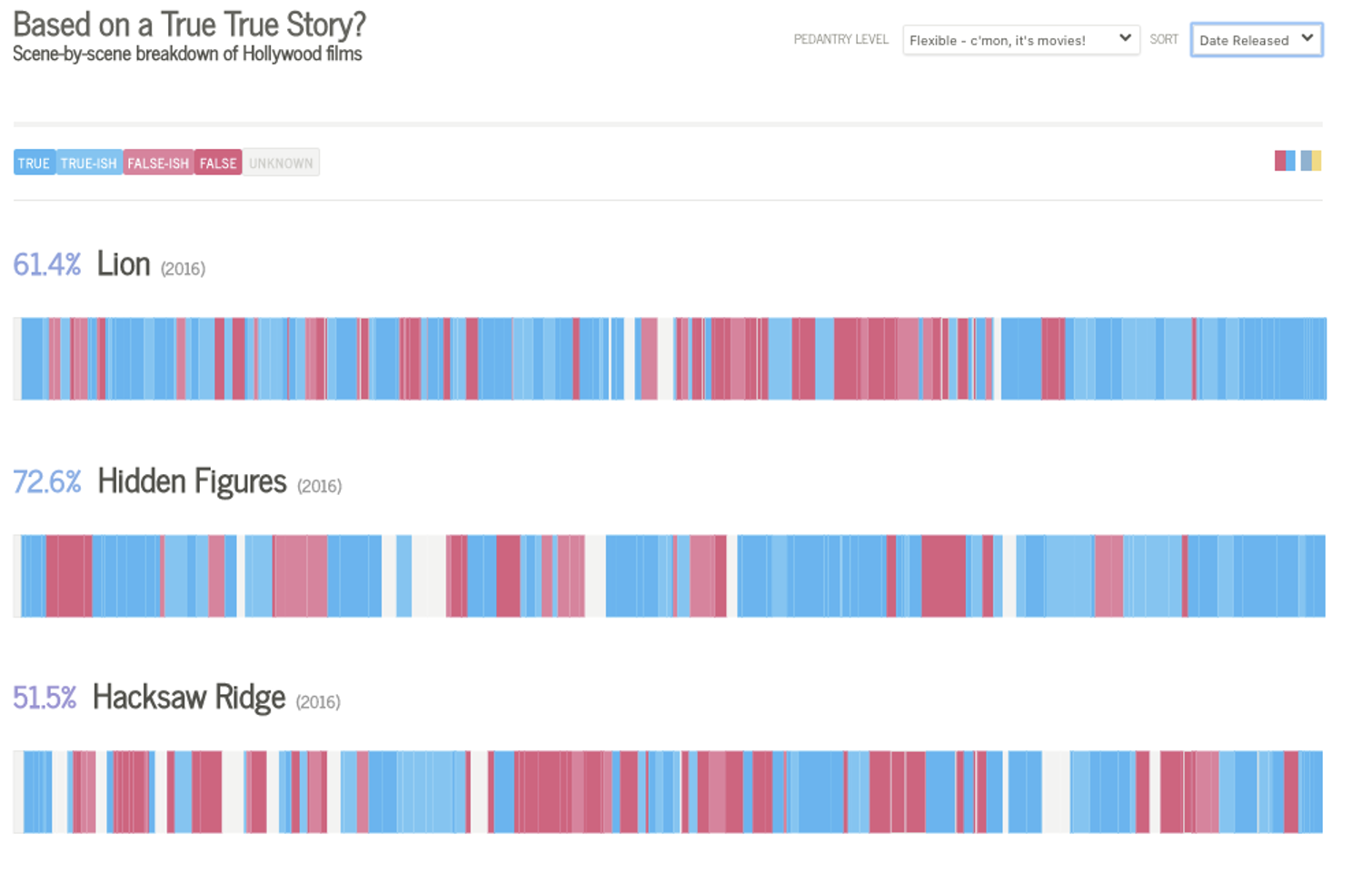
As is exemplified by the Morrissey biopic, the movies should not miss out depth of character, and more importantly, should not miss out depth of audience. Audiences have access to new viewing platforms, critiques and step-by-step updates in the making of movies. A study posted on Information is Beautiful by independent data journalists and researchers attempts to visually quantify the levels of truth and fiction in movies based on real lives and stories. It is exemplary of the kind of access to information audiences have. Details of the lives of the famous, each movie announcement, casting decision and consequent comments are open for all. The contemporary challenge goes beyond the truth of the filmmaker to the truth of the audience.
Biopics remain a major contribution to the chunk of movies delivered. Just this year has seen the documentation of Thomas Edison, controversy around the rapper Tupac’s biopic, disproval of the Hollywood recreation of author J D Salinger, and constant updates of the much awaited story of the life of Freddy Mercury, to name but a few. In a sense the reception and criticism of England is Mine, like that of many contemporary biopics, could signal the changing nature of consumers at a time of easy access to information and documentaries. Perhaps the challenge of biopics today resolves into an evolution of the genre, fitting better not just with contemporary ways of telling the story, but also with those of its enhanced audiences.