Seaside sessions
A passionate volunteer’s unique promenade school
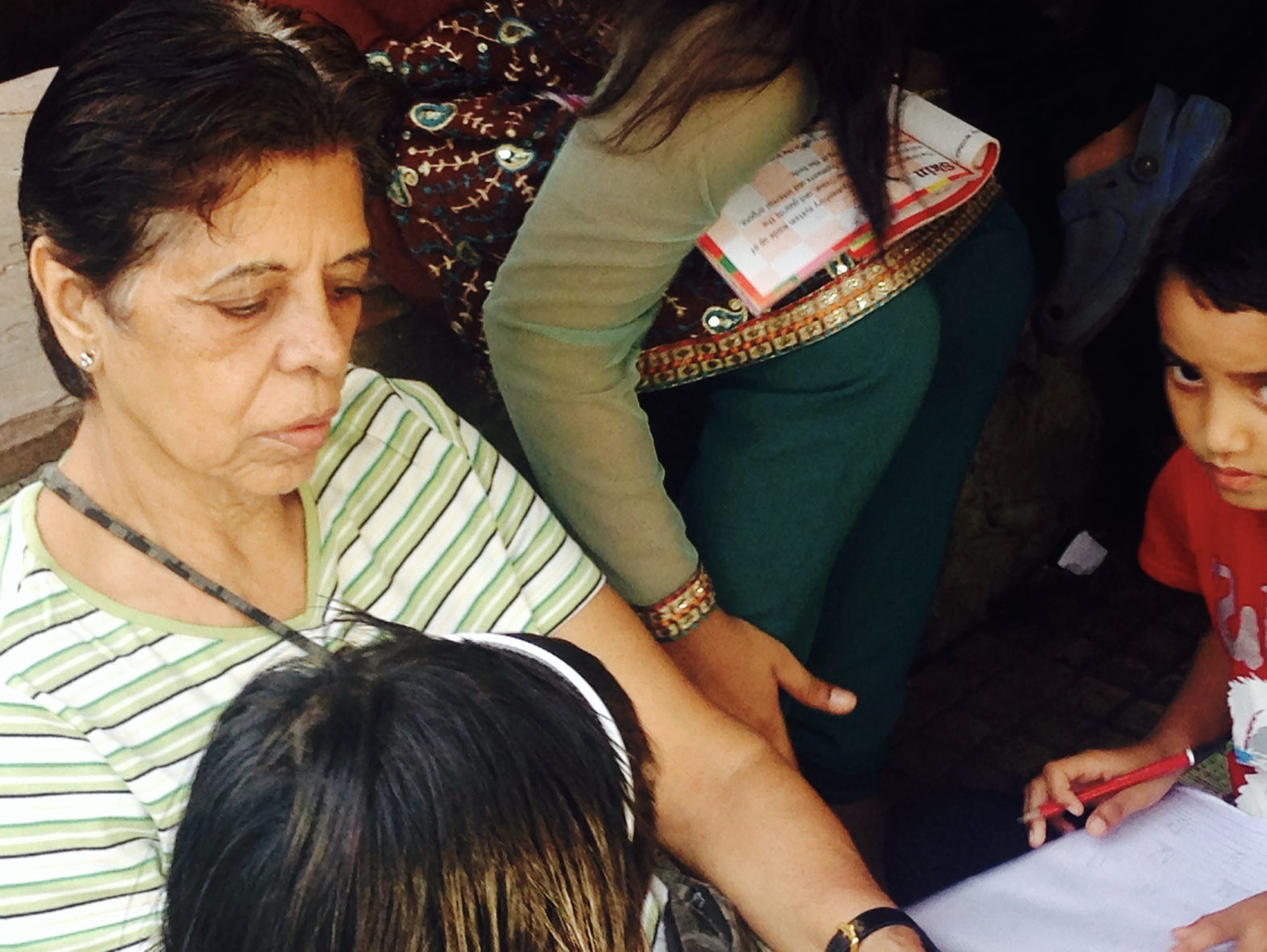
This one is from a long time ago, when I was still a student. Probably one of my earliest feature interviews.
Circa 2014.
On one end of Bombay’s famously busy seaside Carter Road promenade, I came upon someone wanting to share ‘a promise of hope’: an inspiringly gentle, but firm lady surrounded, twice each day, by four dozen children and young helpers, under a bamboo and plastic shed – providing, amongst other things, a brighter future.
Mira Mamnani, a Trustee of Navjot Foundation, had a long and stable career at the Reserve Bank of India, India’s central bank. She made it this far, she shares, because she knows what it is like to learn through the Indian education system: because she knows what’s missing – and she knows what it took for her to be the only one from a class of 40 to pass. She wants to fill the gaps.
She tells us about her unique open classroom: about how hundreds of children (and plenty of adults) stop by these seaside sessions. And her little school is run entirely by the passion of volunteers and the grace of donors sharing books and equipment, respecting her strict ‘no-cash, only resources’ policy.
Despite the success of its initiatives, Navjot Foundation, via which you started this classroom, is a small collaboration. How did you get associated with it?
[My colleague] Mr. Singh is the founder of Navjot Foundation. Walking here, I saw an old man sitting and carrying out (this work). I thought, after my retirement, I might do this, and I actually started and have been here for 10 years. Sometimes, only 7-8 children were there. Now, gradually, there are 200. When I joined, I did not even know it was a foundation. After a few years, I came to know. Now there are two of us: another lady from Powaii and myself.
You had a long professional career at the Reserve Bank of India. What made you want to take up teaching these children?
I learnt from my own experience. My school was too small, and the teachers were not even getting their salaries. Out of 40, one passed. And in my class, I was that one; by my own efforts I have come up. I put my thirst for knowledge in my own children. I used to collect money and go to Raddi Wala and buy Tinkle and all. Today, my daughter is vice president in a company abroad, and my son is with Goldman Sachs. They have bought thousands of books, but they say that (buying those comics) was the only good I have done in my life. Now I want to put the thirst for knowledge in these children.
“I want to put the thirst for knowledge in these children.”
How do you promote this project and make sure the children know that this is going on? Do they attend regularly?
By word of mouth… One day, I got international books, geometry boxes, dictionaries, laptops, chocolates, and whatever was there, and I started collecting them here. I got a good response from the children. Now they may not always come, because sometimes their parents can spare 700-800 rupees for tuition. Some are regular, some are not. But indirectly, we give them things here, and so they come.
No other promotions. I am not social either. Somehow, I feel that God has put me here. People often come to us. For example, Carmel School has invited us. I take my children there to play with the school children, and they are shown videos and everything. And so many programs and picnics.
I never ask. They come. People want to associate because they see that this is a very good cause.
Considering that the children are all in different grades in school, what subjects are taught here?
What we teach is school-related plus other books and computers as well… So many people give us nice books. This is a beautiful area. Apart from the kids, others are welcome. Earlier, so many bhaji walas also used to come to learn.
Very often, the children are given food and other provisions. Since you have a strict no-cash policy, how do you manage to provide these?
No cash at all. Resources just come. Stationery and food are all I accept. People come forward and provide. Sometimes lakhs of rupees are spent on the provision of the children. Each child may get packets of dal and rice. People get this for 130 kids!
The concept you work with is unconventional, and, given the increasing number of children, quite arduous. What keeps you motivated to do this?
My intention is to inspire them. Once they know basics like Math and English, they can really come up in life. They go to Municipal Schools (where) the teachers may not be so good. Here, the environment is good. My only intention is that they have a spark in their lives. See what the rich people are doing. When somebody is 5-6 years old, they get the Internet and everything, and they can read so many things… How much difference is there between this and that! I do it with love and affection… that makes the difference. I get happiness out of doing this, so I do it.