Time travel: In her words
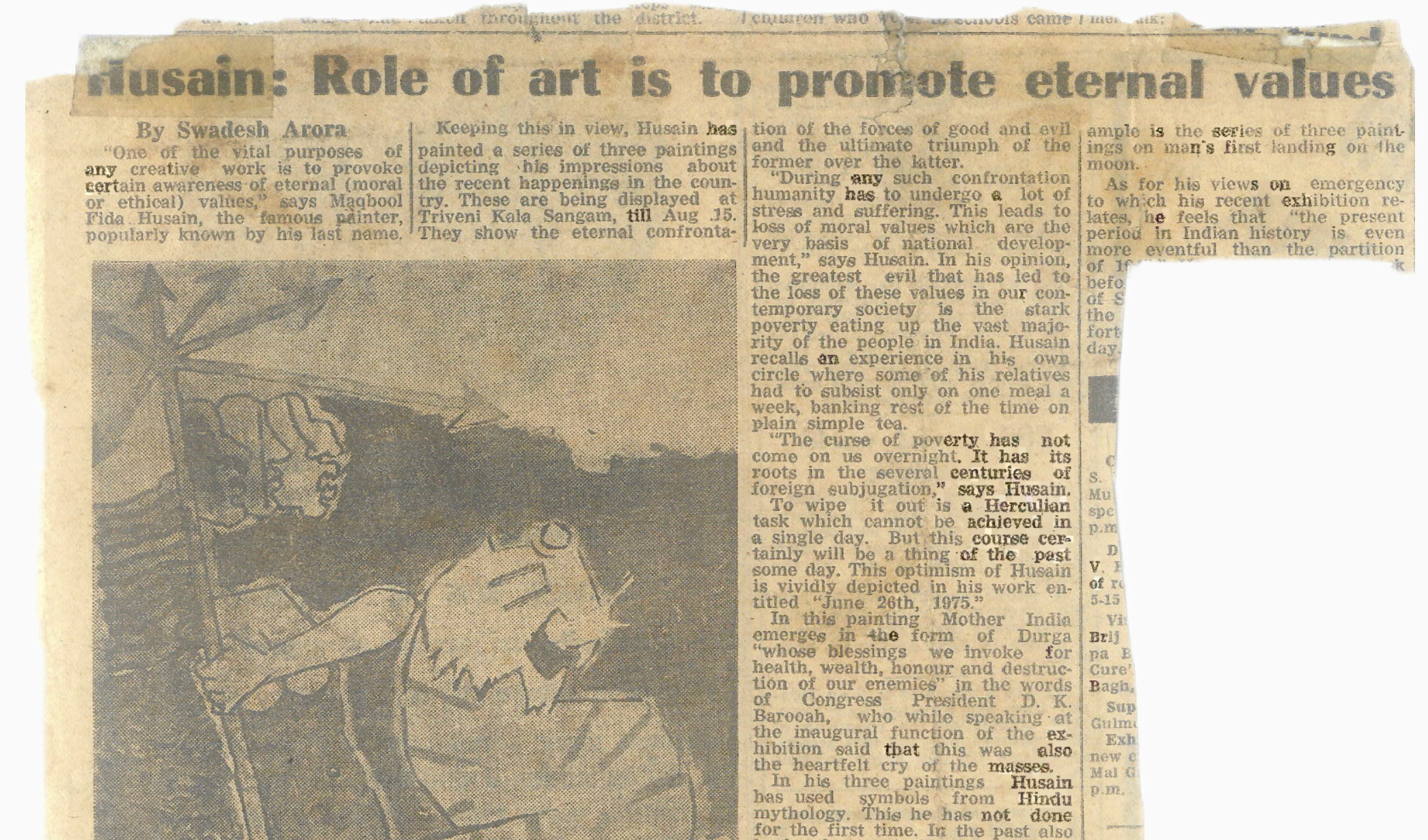
Walk through the galleries, festivals and streets of 1970s India with my grandmother, Swadesh Arora
As conversations today tumble around questions like Why write? Who reads anymore? I find myself anchored by a time when writing was the medium through which people discovered the world. Before feeds and algorithms, newspapers carried culture into people’s homes.
My grandmother, Swadesh Arora, was part of the first batch of the Master's in Journalism in New Delhi, curated particularly for women’s higher education. She spent over a decade (around the 1970s) as a culture writer, spotlighting some of the most celebrated artists (her preferred beat) and a lot of cultural moments of the time.
Going through her writings, I knew I had hit a treasure trove, stuck in time, and I decided that I needed to digitise them.
A little space-time rip into everything going on: the exhibitions, the tea culture, the cultural clothing traditions, the then-new-age fashion trends and the haircuts, the festivals.
Later, she would speak to us often, encouragingly and cheerfully, about the immense value of going back to the books to get that degree, as a wife and a mother of a very young child, balancing the busy, unplanned schedule of a journalist, and the sheer pride and joy of loving what she did.
What really stays with me about writing from that time is that it was the prime medium. It was the internet, it was the social media. It was how you found out what was going on. All of it. Her writing, what the art and artists of the time were saying, is timelessly inspiring.
And many decades later, it’s how we can go back there.
Take a walk with her words into the what’s what of all things culture in the 70s.
[Note: You may skip my rambling below and scroll to the end of the page for the full archive. On the links, you might have to rely on the ‘pinch-and-zoom’ for most of these, especially if accessed on mobile].
Art was her most loved beat, and most of her pieces explore the mediums and messages of that time.
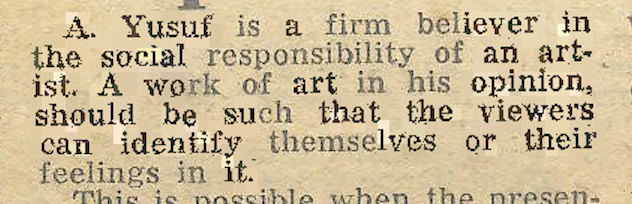
Some of her favourite features were with M.F. Husain, the “Picasso of India”, whom she interviewed on multiple occasions across various stages of his career, through the rewards and controversies. This piece on art and eternal values covers a series of three paintings depicting the happenings in the country at the time.
She regularly covered, over 10 years, artists with disabilities, such as recording this special exhibition of artists painting with mouth and foot, and one of my favourite pieces on Kuldip Kumar, the sculptor, who can’t speak but whose “art spoke volumes” as she wrote.
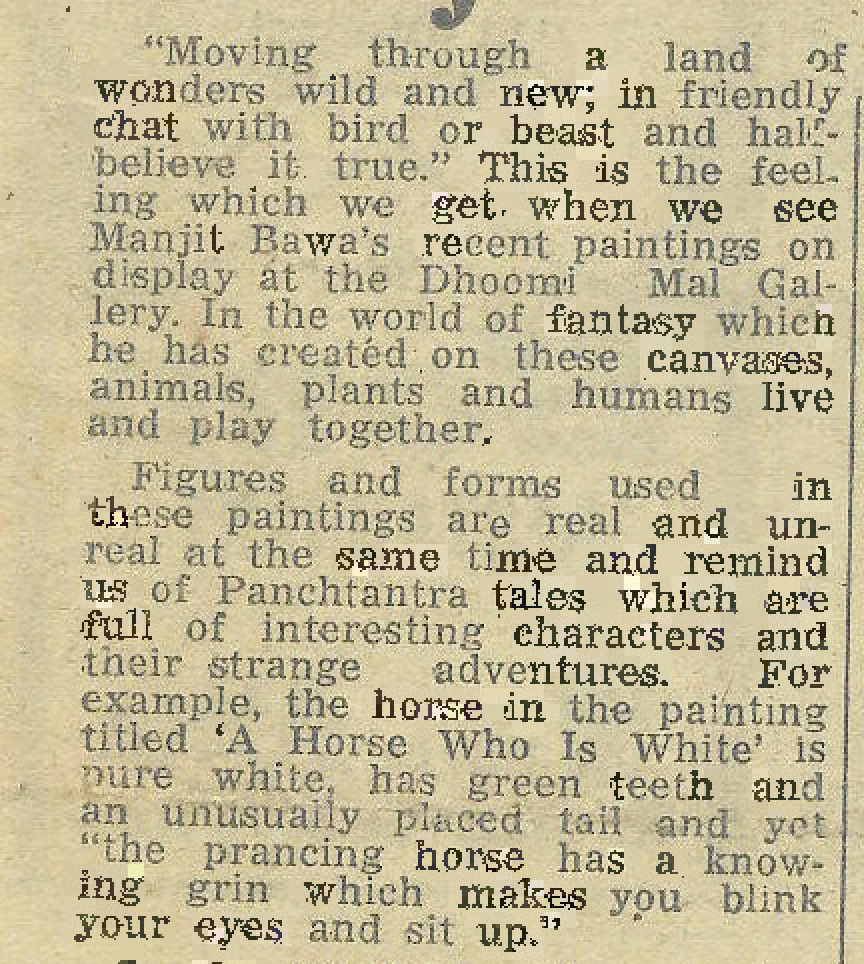
The articles took me into the world of experimentation (“dead wood as living art” stands out), the interview with the renowned classical dancer Uma Sharma on “Aurat”, her composition depicting the beauty of a woman, this posthumous display of Amrita Sher-gil’s rare paintings, delicate paper-cut crafts, or into a famously unrelatedable poet’s take on the ‘agony and contradictions’ in the lives of the rich, the general-turned artist, the doctor-turned artist, the collectors of “phulkari” folk-embroidery.
She also wrote often about trends and objects that held historical and cultural significance, and where they stood in that time.
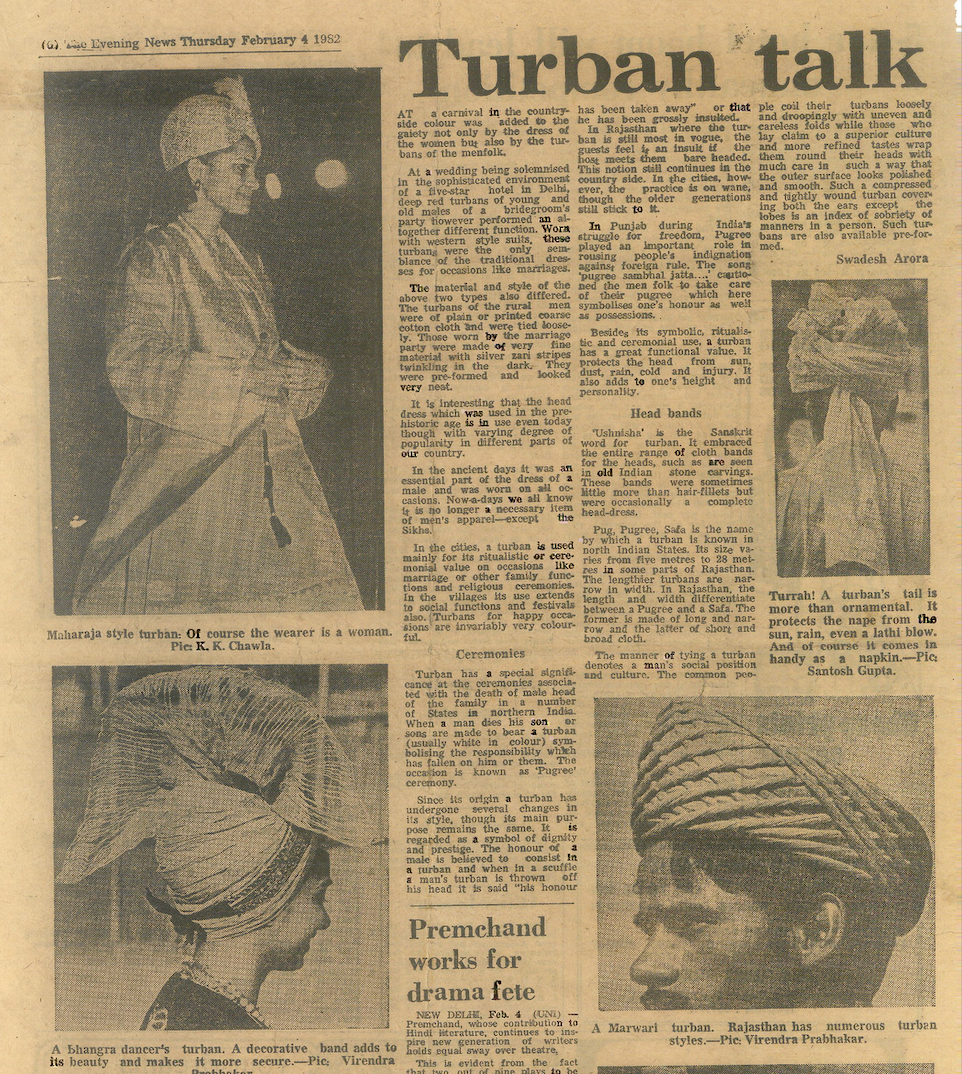
Bangles (symbols of joy, love and girlhood in the 70s), the trendy Menhdi (henna) phases, turbans as a ranging motifs across states in India – decorative, ceremonial, religious – and the intricacies of the histories.
There’s a piece on the International Dolls Museum, displaying collections from around the world which she called the “A United Nations of Joy and Beauty” thanks to the 5,000 “lovely and affectionate ambassadors” from across the world, India, Japan, Slovakia, Hungary and England, part of Queen Elizabeth’s collection.
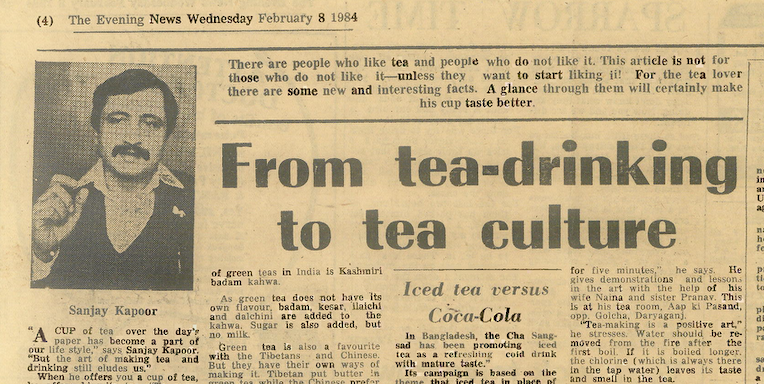
Then there’s flower arrangements “for decoration and inner harmony”, and the tea culture standing firm across all tests of time.
A sneak-peak into the posh social status signalling Delhi-ites of the 70s (“Did you move to Def Col? Which school did your son go to?”), but also the overall state of education in that era.
She knew her audience, as she covered art and artists: what it was like buying paints back then, or tips for buying gems like diamonds.
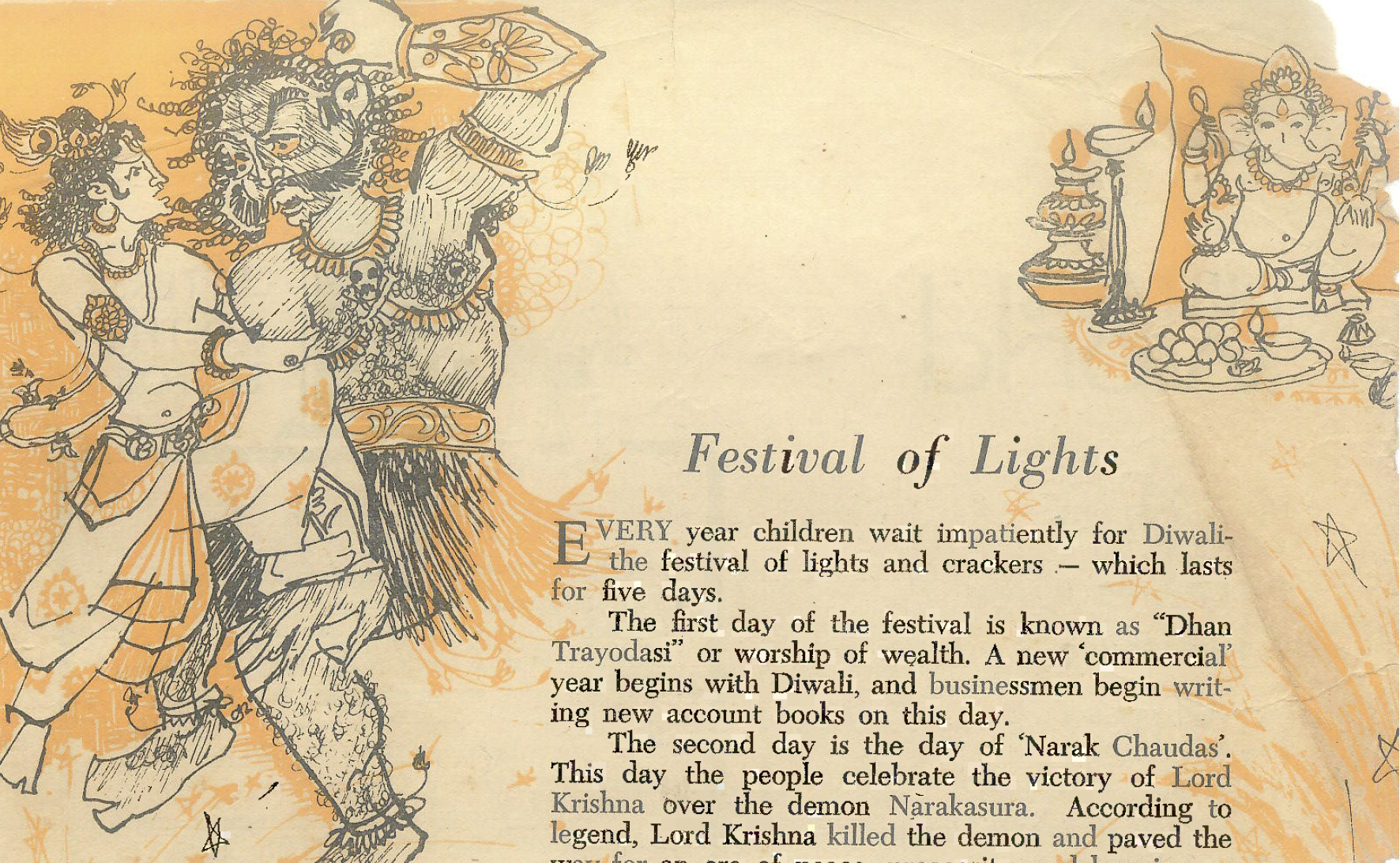
There is a lot about the significance, preparation and celebration of festivals like Rakhi (the “slender string” for a “deep bond of love”, Teej (festival of showers, swings and songs), Durga Puja, and some beautiful Diwali features – if you’re curious about what people were doing back then (or the best spots the marketplace must have and the most economical buys!)
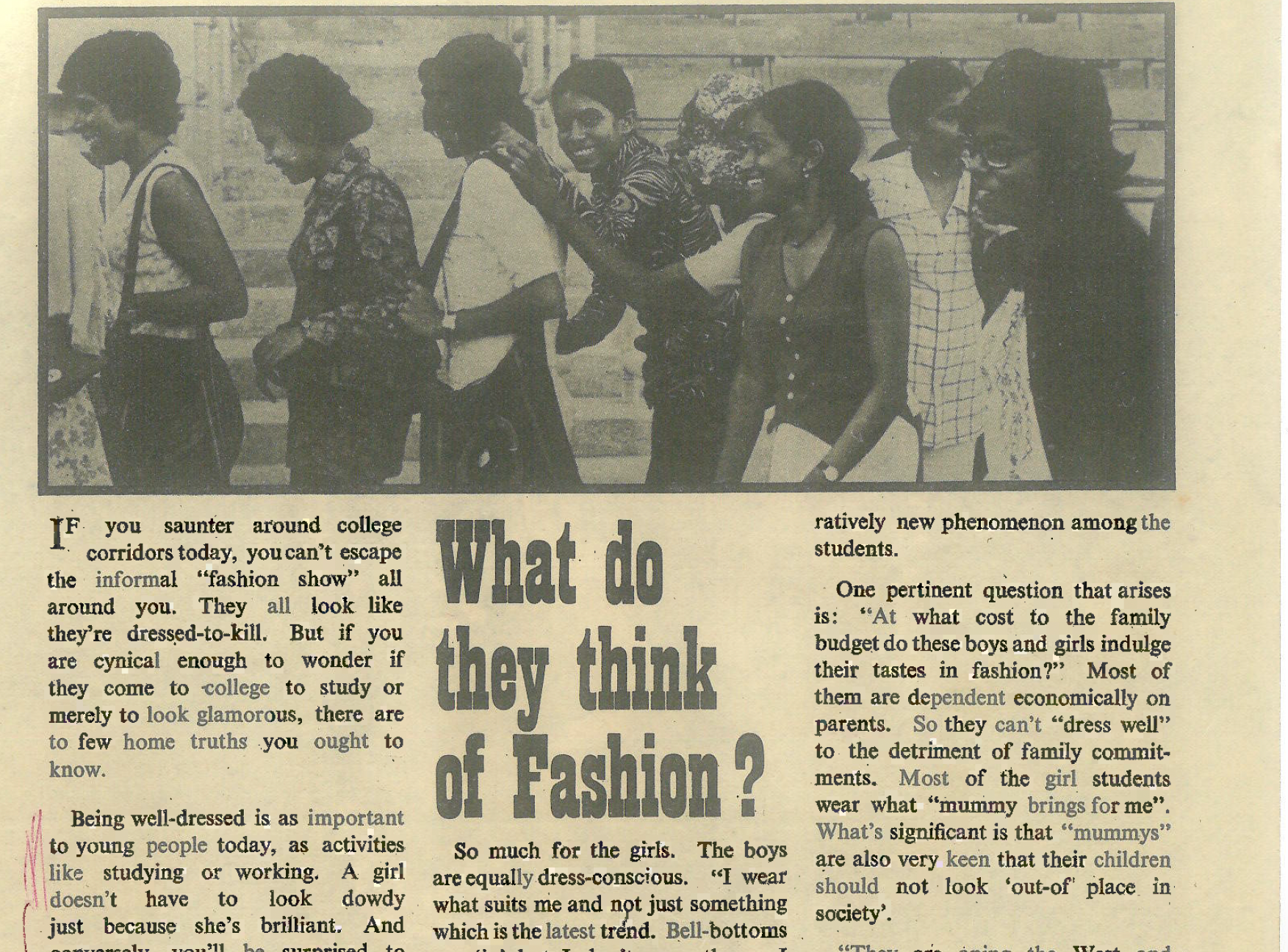
And she wrote on and for the youth:
The hairstyles (“the latest hairstyle for men is very short, John Travolta type hair”).
The fashion on the city campuses (women emphasising identity and young boys rejecting what they called the “childish bell-bottom fad”).
And tackling the apparently eternal question – tips on what to do after high school (I had to look up what a “punch operator” was, but apparently it was a great option for those staring out).
Decades later, you see that the writer of the time documented a living, changing India in real time; and (as an AI agent ironically told me recently), maybe that is why writing matters.
A personal note: When you’re a child, art and creativity feel natural. You scribble around, fold the paper into tiny boats, and float them away, with no regard to who will read them, or whether they matter. My grandmother was among the first to take my words very seriously. Whatever I’d write, she’d save – rewrite it in her practised hand and file it away in notebooks. As I grew up and made sense of the world, I started to understand why and what it meant.
Reading my grandmother’s body of work, years of writing and reporting on culture, now feels like stepping into a time machine, with lessons in and between the lines.
Listed Archive:
Art:
Husain: The role of art is to promote eternal values
New Husain in cyclone works
Cartoonist who believes: Children of the world are one community
Amrita Sher-gil’s rare paintings
Manjit Bawa's fantasy world
Yusuf's graphics on social responsibilities
General who makes wood sculpture
Sculptor speaks through amimals and birds
Ahmed's on-the-spot work among women artists
Phulkari, flower-like folk embroidery of Punjab
Doctor with an artist's vision
Culture:
What shall I do after High School?
Has India Progressed? The Education Muddle
Arranging flowers for decoration and inner harmony
What do they think of fashion?
“A United Nations of Joy and Beauty
Festivals:
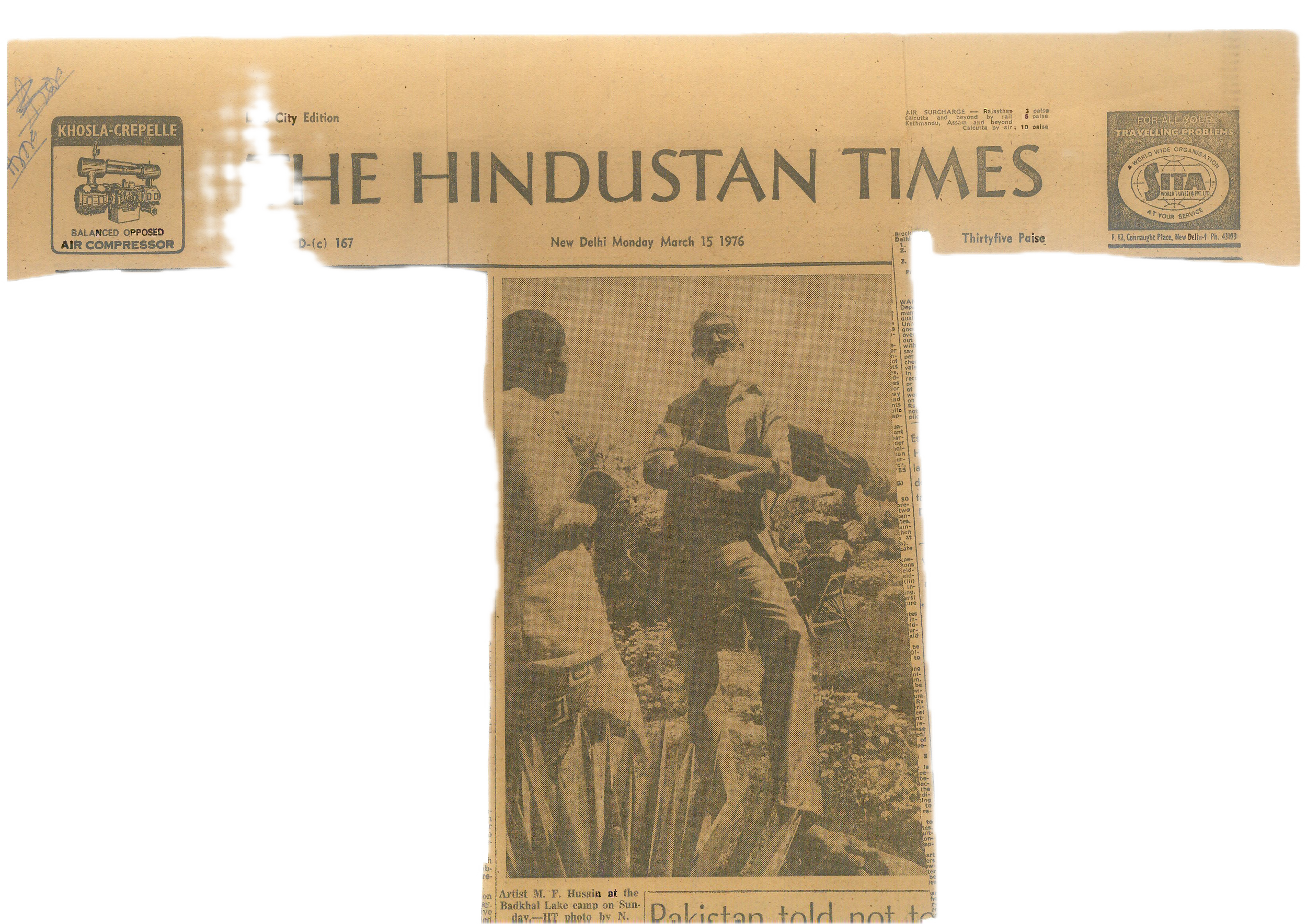
A picture from Swadesh Arora’s interview with Husain.